
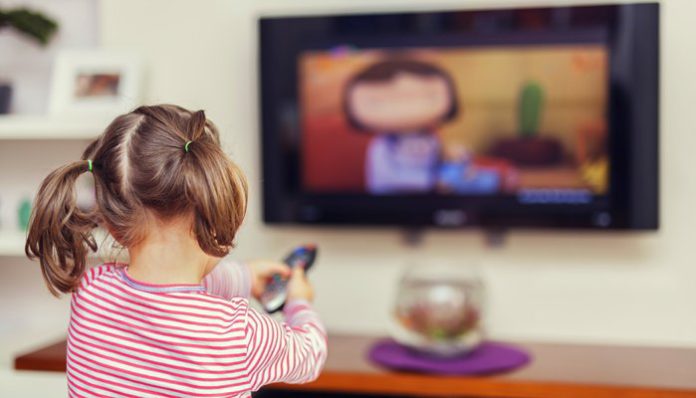
Cartoons have been related to children since they started to appear on newspapers and television and you might get opinions from many adult people that cartoons are meant for kids. Well, these ‘creatures’ could be of educational and health benefit to children as well as adults.
Advantages of watching cartoons.
1. Aware of the social life:
At an early age of 3 years, kids could have an idea of what is going on in the social world and they are able to grow with the knowledge of interacting well with people in the society.
2. They build their vocabulary:
Through cartoons kids are able to learn new vocabularies hence improve their speech and use of vocabularies in writing which is of great benefit in education.
3. Boost of concentration: kid will have more power in concentration than a kid who does not watch cartoon simply because the one watching has the ability of following up events (in the cartoon episodes).
4. A good form of entertainment:
Cartoons give kids safe satisfying
5.Makes a Child feel more confident
while watching their favorite cartoon show, kids adopt many things and sometimes they talk and behave in the same manner as their favorite characters do.
6. Enhance imagination and creativity
By watching cartoon films, children become more creative. They try to do things in different ways. so their imagination and creativity is enhanced.The children get new ideas with which they can show their talent.
7. Develop parent-children relationship
When parents buy different storybooks, watch different cartoons and children programs with their children or let their children to cinemas for watching movies. In each of the above case parents spend time with their children. As a result parents child relationship is improved. Many researches have shown that media influence parent child relationship.
Disadvantage Of Watching Cartoons
1.Violence
According to research by psychologist Steve Hossler of Bowling Green State University. specifically, watching cartoons has a negative effect on the way children view violence. cartoons often depict violent acts like explosions, gunshots and death. However, these acts of violence occur in extreme situations with no consequences. A child’s brain, emotions and sense of pain are negatively affected because they become desensitized to violence.
2.Injury
In 2004, Dr. Ruebert Saturnine III presented an argument on the negative effects of cartoons on children for the Animation World Network, Inc. One of Saturnine’s criticisms focused on copycat incidents where children injured themselves by trying to imitate fictional characters. The first case of a cartoon-related lawsuit occurred in 1928, when a small boy, Dickie Johnson, took his family’s yacht out on a lake as he tried to replicate a cartoon sea captain. Dickie crashed the boat and his family filed a case against Walt Disney on charges of corrupting a minor. During the trial, Dickie testified and stated, “I thought if a lowly, common mouse could drive a boat, surely I could, too.” Saturnine stated that cases of cartoon-related injuries increased steadily each year after the Dickie Johnson incident. Because children are unable to make the distinction between reality and fiction, they cause harm to themselves by imitating what they see in cartoons.
What can we do to reduce negative impacts and make cartoons a healthy entertainment for kids?
1.Children must have a balanced lifestyle in everything they do, including watching cartoons.
2.Parents should control and limit the time children spend watching TV or using a computer to maximum one hour a day.
3.Parents must explain that the cartoon character in a certain scene has not been harmed, but would actually be seriously injured or die in real life. Parents should also tell their children that violent behavior is not the best course of action to resolve a conflict.
4.Some cartoons should have an age limit.
5.Children should not be allowed to watch certain cartoons whose content they cannot understand.
6.Parents should provide cartoons to their children which could have a positive impact on them.
7.It would be better if parents also watch and discuss the characters of cartoons with children.

 Islam Mohamed